




What Is Biophilic Design in Architecture?
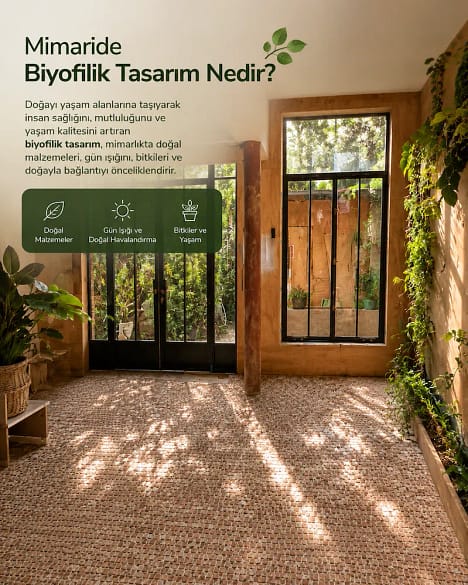
Today, city life forces most of us to spend nearly the entire day in enclosed spaces that feel like boxes. Trapped between four walls, modern humans unconsciously experience a sense of unease stemming from their disconnection from nature. It is precisely at this point that a movement is gaining momentum in the world of architecture—one born not merely from an aesthetic concern, but from an existential need: Biophilic Design.
Simply placing a few potted plants in a space or painting a wall green isn’t enough to make a project biophilic. True biophilic architecture is a comprehensive ecosystem design that seamlessly integrates human biology, environmental psychology and structural engineering.
Not Just a Visual Choice; A Connection Rooted in the Essence of Humanity
When we bring the concept of biophilia—which essentially means “love of life”—into architecture, we encounter a discipline that integrates nature’s rhythm, light, and raw materials into living spaces. The primary goal here is not to create flashy decorations, but to reawaken humanity’s ancient, evolutionary connection to nature through spatial experience.
When applying this approach to our projects, we focus on three key layers:
- Nature’s Direct Infusion into the Space: Daylight reaching even the farthest corners of the room, a stream of fresh air flowing in, and the soothing sound of water…
- Natural Analogies: Incorporating the flawless fractal patterns, organic curves, and raw materials (wood, stone, marble) that grow more beautiful with age—as seen in nature—into every detail, from furniture to building facades.
- The Nature of the Space: That delicate balance between offering sheltered niches that make people feel safe and creating expansive panoramic views that evoke a sense of openness.
The Language of Numbers: What Does Biophilia Tell Us?
Global studies clearly demonstrate the impact of spaces designed to integrate with nature on people:
- In the Workplace: As focus and productivity improve, employee absenteeism rates due to stress are significantly decreasing.
- In Healthcare Facilities: Patients in rooms that receive natural light and overlook green spaces are seen to recover more quickly.
- At Home: By lowering cortisol (stress) levels, it promotes mental clarity and a much better sleep routine.
Sustainability and Smart Structural Engineering
Biophilic design is now one of the most critical pillars of global green building certifications such as LEED or WELL. For us, this process is an engineering decision that must be managed with technical precision:
- Living Microclimates: Vertical gardens or living walls used indoors do more than just provide a visual feast; they balance the humidity in the environment, filter the air, and provide natural sound insulation.
- Circadian Rhythm: Bringing the dynamic fluctuations of natural light indoors supports living in harmony with the human biological clock. Feeling the passage of time even within indoor spaces creates a sense of mental comfort.
- Material Integrity: Instead of artificial, mass-produced, and soulless composites; breathing life into elements like raw wood, exposed concrete, and fired clay—materials that remind you of nature when you touch them.
Structures That Leave a Mark on the Future
With every new project we undertake, we don’t just design a building; we design the quality of life for the people who will live within it. The biophilic approach is not a passing fad or a popular trend in our architectural practice; it is an essential standard for a healthier future in harmony with nature.
If you’d like to transform your living spaces or workplace with the healing power of nature, feel free to browse our portfolio and contact us anytime .
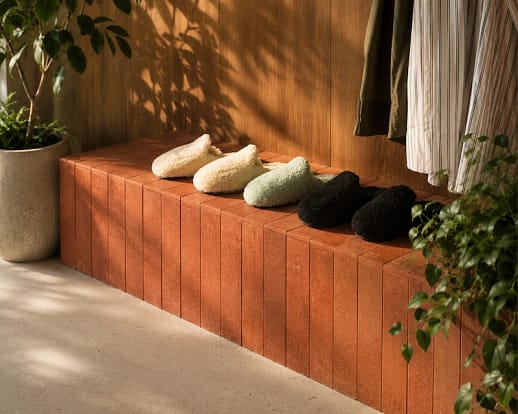
Communite Store Istanbul An image from our project
Frequently Asked Questions
Is biophilic design an expensive solution? How does it affect the budget?
Biophilic design should not be viewed as a luxury expense. Of course, large vertical plant walls or specialized smart automation systems can increase the initial investment cost; however, creating a floor plan that maximizes natural light, selecting the right raw materials, or designing for natural air circulation does not incur additional costs. On the contrary, it is actually a smart investment that pays for itself over the long term by delivering energy savings and boosting human productivity.
Isn’t it hard to care for live plants indoors? Does it take a lot of time?
This is entirely a matter of engineering decisions made during the design phase. With the right architectural design, local plant species that are best suited to the space’s light and humidity levels and require minimal maintenance are selected. Additionally, in corporate projects or large-scale residential developments, the maintenance burden can be reduced to nearly zero by integrating self-watering smart hydroponic systems or vertical garden automation.
Does biophilic design simply mean “green building”? What is the difference between the two?
These are concepts that complement each other but have different focuses. Green buildings (LEED, BREEAM, etc.) focus primarily on a building’s carbon footprint, energy and water conservation—in other words, its environmental impact. Biophilic design, on the other hand, focuses on the people within the building and their biological and psychological well-being. In summary, while green buildings aim to protect nature, biophilic design brings nature and people together.
Is a biophilic transformation possible in small offices or those with limited natural light?
It’s definitely possible. A biophilic approach isn’t limited to massive glass facades. In spaces with insufficient natural light, artificial lighting technologies that support the circadian rhythm, surface finishes that mimic the fractal geometries found in nature, the use of tactile materials like natural wood and stone, and even acoustic designs incorporating natural sounds can all create a very powerful biophilic effect.
If you’d like, here are some handmade ceramics that would go well with my biofiligree designs Handmade Ceramics and Terrazzo Tiles collections, as well as our products in other categories.

