Craft Revival: The True Value of Handcrafted Art
We live in an age where factories churn out hundreds of products per minute from the same mold, and algorithms exhaust trends in a matter of weeks before imposing new ones. Everything is fast, everything is accessible, and, unfortunately, everything is almost identical. Right in the midst of this mass-production saturation, a quiet but powerful counter-movement is gaining momentum: Craft Revival (The Rebirth of Craft).
So why is it that, for some reason, people are turning away from flawless mass-produced items—which are readily available and inexpensive—and toward handmade objects that take weeks to create, cost more, and bear the marks of their craftsman? What lies behind this value that resists the speed of mass production?
The Coldness of Perfection and the Quest for Originality
The promise of mass production is millimeter-precise symmetry and perfection. However, when you look at a mass-produced object or surface finishes that have come off an assembly line, the most dominant feeling you get is usually “coldness.” Each one is an exact copy of the other.
When it comes to handcrafted items, however, the situation is entirely different. A product created by a craftsman may feature a slight asymmetry, a unique hue acquired during firing, or a natural indentation in the material’s texture. These details—which might be considered “flaws” from an industrial perspective—are, in fact, what give the product its identity. The Craft Revival movement celebrates these charming imperfections and uniqueness as a counterpoint to the uniformity created by the pursuit of perfection.
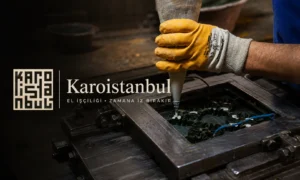
Objects with a Story: The Return of the Question “Who Made It?”
In traditional consumption habits, the connection we form with an object is not limited to its function alone. Mass production has severed this connection between people and objects; we no longer know who made the clothes, furniture, or finishes that adorn our spaces, or under what conditions they were produced.
Handcrafting, on the other hand, gives the product a new story :
- Investment of Time: While fast-moving consumer goods are produced in a matter of hours, artisanal products embody patience and the accumulation of years of experience.
- The Human Touch: What you’re buying isn’t just an object—it’s the work, focus, and aesthetic sensibility of a master craftsman.
- Wear and Patina: Fabrics shaped using traditional methods gain “character” rather than simply wearing out as they age.
Consumers now value not just a function, but the human story behind it.
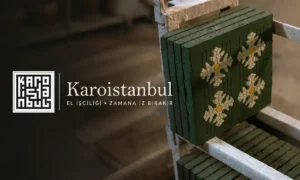
Slow Consumption and Sustainability
The burden that the throwaway culture places on the planet is plain to see. Cheap products that are replaced every season have become the enemy of both the ecological balance and the aesthetic character of spaces.
Craft Revival, directly the philosophy of slow living and the philosophy of sustainability. An object crafted by hand:
- Durable: Because the focus is on quality, durable materials and timeless designs are used.
- Repairable: While mass-produced items are designed to be thrown away when they break, products made using traditional techniques are suitable for maintenance and can be used for many years.
- It’s local: Reduces the carbon footprint; supports local artisans, local materials, and the local economy.
Traces of Craftsmanship in Spaces: Bringing Soul to Living Spaces
The Craft Revival movement isn’t limited to small decorative objects; it’s also making a strong impact on architecture and interior design. People now want to see textures crafted by skilled hands in their living spaces, rather than mass-produced surfaces.
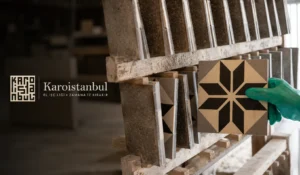
Especially in wall and floor designs, Karoistanbul—which comes to life through the shaping and firing of traditional clay— handmade ceramic collections—brought to life through the shaping and firing of traditional clay—you can add a unique warmth to any space. Similarly, with our Karo products, which bring traditional motifs and natural pigments to life, break the monotony of mass production and give every space its own unique character.
The New Face of Craft in the Digital Age
The revival of craftsmanship does not mean a complete rejection of technology. On the contrary, today’s artisans are combining traditional methods with modern communication tools.
Social media platforms and independent e-commerce infrastructures enable a craftsman in his workshop to connect his products with a design from the other side of the world. Videos of the production process, moments capturing the processing of raw materials, and the artisan’s daily routines are among the most popular content in the digital world. Rather than eliminating craftsmanship, technology is transforming into a showcase that brings it to the forefront.
What Lies Ahead: Will Mass Production Come to an End?
Of course, mass production isn’t going to disappear from our lives; we need fast, large-scale production in certain areas. But what the Craft Revival reminds us is this: Not everything has to be fast and cheap.
In our living spaces, where we seek meaning, spirit, and originality, handcrafted work will never lose its value. In a world where mass production leads to mass consumption, every handcrafted object remains a lasting mark left by time.
Frequently Asked Questions (FAQ)
What does “Craft Revival” mean?
Craft Revival is a global movement that emerged as a reaction to industrial mass production and fast consumption; it revalues traditional craftsmanship, original designs, and local production.
Why are handmade products more expensive?
Handmade products are produced in limited quantities per unit of time. The price reflects not only the high-quality raw materials used but also the artisan’s experience, the significant amount of time spent, and the non-mechanized labor involved. Furthermore, there is no advantage from economies of scale found in mass production.
How do you care for handmade ceramics and tiles?
Handmade ceramic and tile products require more specialized care than mass-produced items due to their natural and porous structure. It is recommended to use pH-neutral cleaners and a damp cloth instead of chemical cleaners containing abrasives or strong acids. With protective sealants applied to the surface and proper cleaning methods, these products will retain their original aesthetic appeal for many years.